Human or AI Authorship Declaration Standard
A standard for declaring the level of AI involvement in any written work

Human Written
Scarcity value of well-written text is now approaching zero
The value of anything is related to its supply. As AI drives the cost of well-written text to near zero, unfortunately, its value decreases.
We used to value well-written text because a human who was intelligent enough to write well had spent their time writing such a text. This is no longer a prerequisite for a well-written text being produced.
Of course, there are instances where one is happy to read AI-generated text. For instance, if you are clear about the prompt and it is focused on answering a question that you are interested in, and it does so efficiently.
Four levels of AI involvement in authorship
There is a set of different levels of AI involvement in writing a text, which is provided below.
There is merit in authors declaring the level of AI involvement there has been in the production of any text they claim to have ‘authored’.
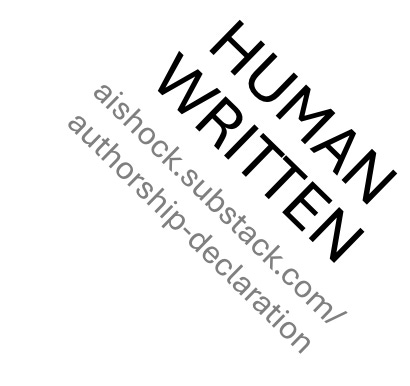
[Note: At the bottom, you can find a HUMAN WRITTEN logo you can put at the top of any document you write yourself]
Writers can use this set of descriptors below in any declarations about AI’s contribution to any text they disseminate under their name. They can link to this article under a note at the top of their text, such as the ‘human written’ note at the top of this piece.
Here are the levels of AI involvement in authorship.
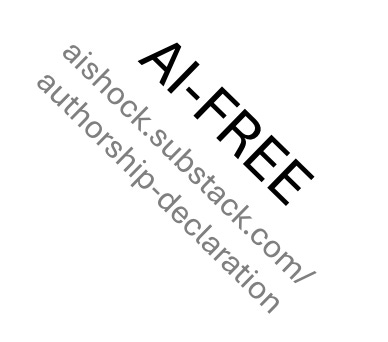
AI Free: No use of AI in any way in writing the text.
Human Written: The text was drafted by a human, and AI was only used for punctuation, spelling, and grammar suggestions within sentences. The use of AI reduced the amount written by the author rather than injecting significant amounts of additional AI-created text into the text.
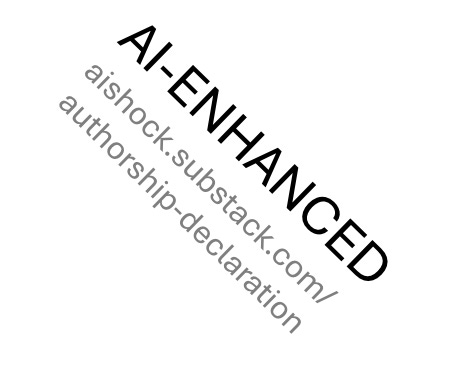
AI Enhanced: AI was used extensively to write the text with human input.
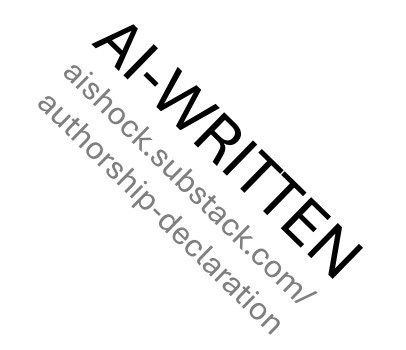
AI Written: AI wrote the text, and there was only a small amount of human editing, if any, of what the AI had written.
Worked example of a declaration
‘This book was fully drafted by the author. The AI input into its writing used the grammar checker Grammarly to check punctuation, spelling, and grammar. In those cases where grammar suggestions were accepted, there were changes in the order of words within sentences and the occasional substitution of a word. The option in GrammarlyGo to enter a brief amount of text summarizing what you want to be written and then having Grammarly’s AI write a longer version was not used. Suggestions used from Grammarly reduced the amount of text the author had written. ChatGPT was used to check for typos and suggest improving unclear individual sentences. Less than five percent of the sentences in the book were changed. Bard, Bing, Perplexity, and ChatGPT were used to search for information relevant to some of the concepts in this book.’
This example declaration is from Duignan, P. (2026) Surfing AI: 30 New Concepts for Getting Your Head Around AI Shock.